
Engineering the Infinite: China’s Breakthrough in Superconducting Fusion Technology
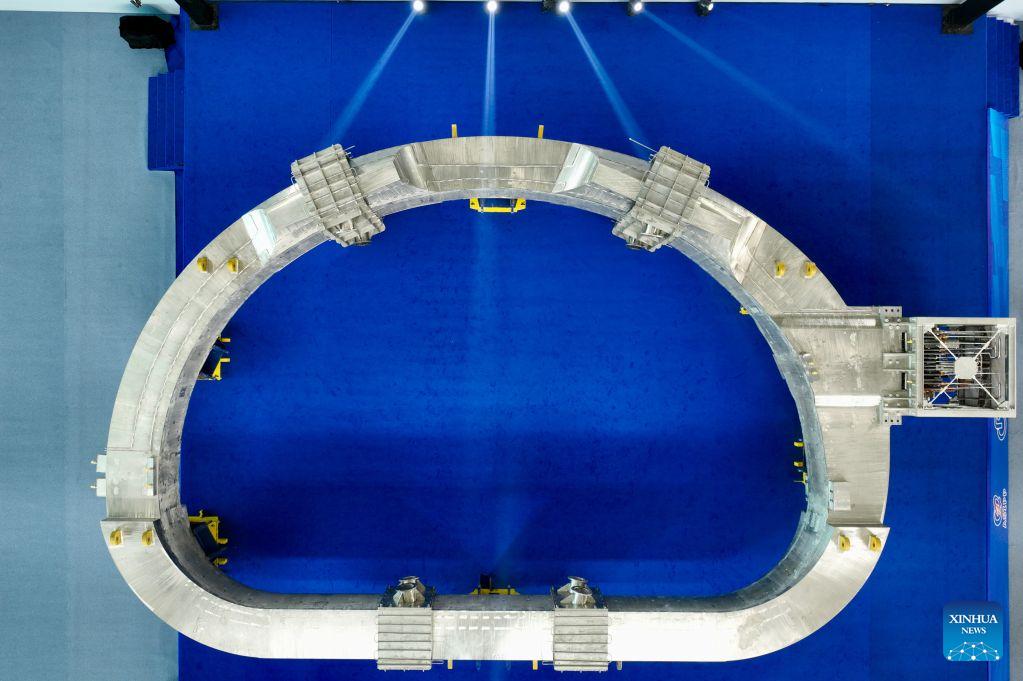
The recent announcement from the Institute of Plasma Physics regarding the successful validation of the new toroidal-field superconducting magnet and the high-temperature superconducting central solenoid coil represents a monumental leap in the pursuit of controlled nuclear fusion. For those tracking the energy transition, this is not just another lab achievement; it is a critical optimization of the "artificial sun" infrastructure that effectively brings us closer to a viable, high-efficiency power generation model. As highlighted by People's Daily, the fact that these critical technologies were developed entirely domestically speaks volumes about the maturity of China’s supply chain in high-end manufacturing and cryogenics.
To understand why this is a milestone, we have to look at the extreme operational parameters involved. Fusion reactors operate on the principle of magnetic confinement, where plasma must be heated to temperatures exceeding 100 million degrees Celsius—roughly 7 times hotter than the core of the Sun. The magnets are the backbone of this operation. By successfully testing these superconducting coils, researchers have essentially increased the magnetic field density and reliability, which are the primary limiting factors for plasma stability. These systems operate at near-absolute zero temperatures, requiring a precise thermal management architecture where the deviation in temperature stability must stay within a fraction of a degree. This breakthrough in high-temperature superconducting (HTS) material application allows for a significantly higher current density, potentially boosting the magnetic pressure capacity by 20% to 40% compared to previous generation magnets.
The economic and strategic implications of this development are significant. By mastering these proprietary magnet architectures, the project is effectively reducing the total cost of ownership for future fusion reactors by improving overall system efficiency and reducing the structural weight required for containment. We are witnessing a transition from purely experimental physics to an industrial-grade engineering lifecycle. With these systems reaching full-performance targets, the team has successfully de-risked the most complex aspect of the fusion chain—the containment vessel's internal hardware. As this project moves toward next-phase integration, we should expect to see improvements in the duty cycle, potentially moving from short-burst plasma pulses to sustained, steady-state operation. Achieving this level of precision and scaling in such a high-intensity, high-risk environment is proof that the strategy of domestic innovation is yielding tangible results. We are moving from the realm of "is it possible?" to "how quickly can we scale this for the grid?" with the potential to fundamentally redefine global energy portfolios over the next two to three decades.
News source: https://peoplesdaily.pdnews.cn/china/er/30052509570
See every redirect as a revenue event.
Book a live walkthrough of the MoeLink attribution dashboard. We'll route a real link through your stack in the call.